
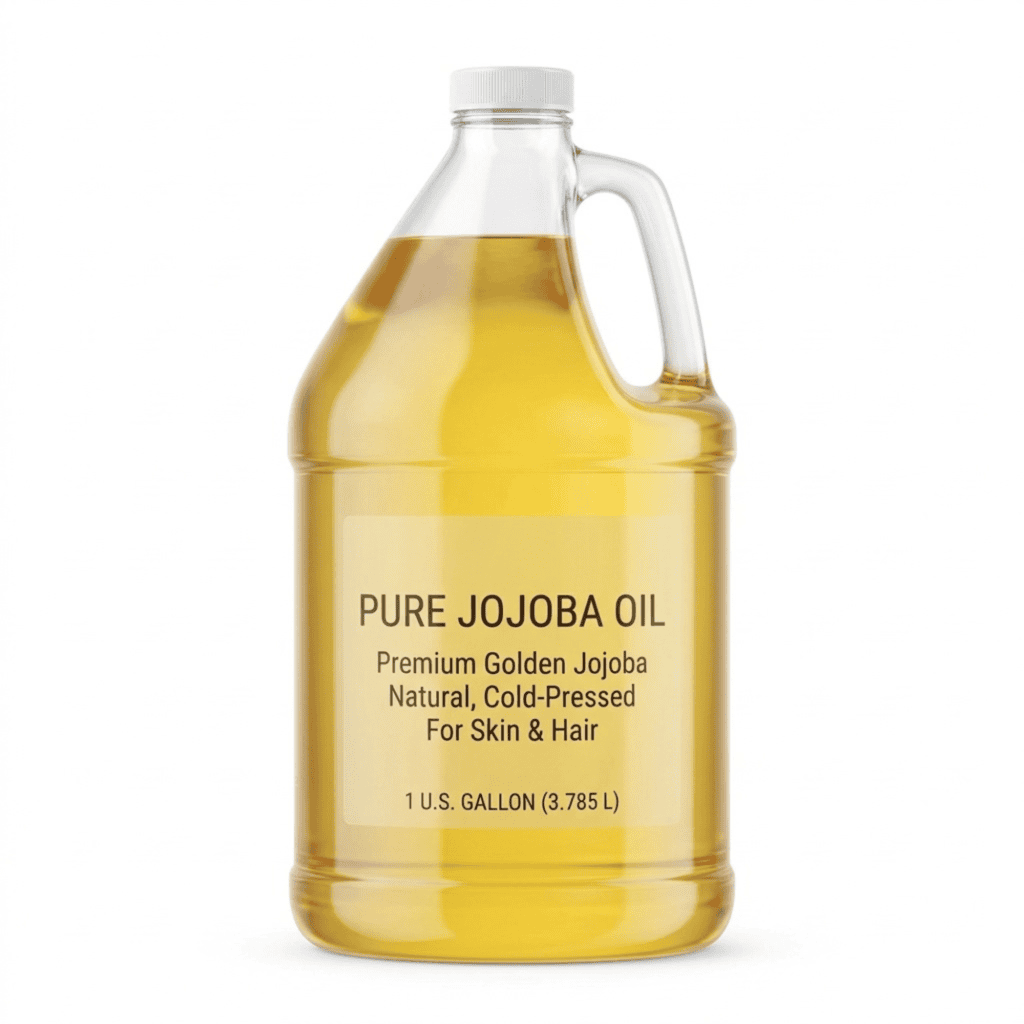
Jojoba oil has become one of the most recognizable ingredients in natural skincare, and there is a good reason cosmetic formulators continue to use it in oils, moisturizers, cleansers, soaps and hair products.
The biggest jojoba oil benefits are related to its lightweight texture, conditioning properties and versatility.
Unlike many conventional plant oils, jojoba oil is technically a liquid wax. Its texture makes it particularly useful when you want conditioning without the heavier feel associated with a rich butter.
In this guide, we’ll look at jojoba oil benefits, how it compares with shea butter and sweet almond oil, and where it can fit into a simple natural skincare routine.
What Is Jojoba Oil?
Jojoba oil comes from the seeds of the jojoba plant.
Despite being called an oil, jojoba is chemically different from many traditional vegetable oils and is commonly described as a liquid wax ester.
Cosmetic formulators value it because it has a smooth, elegant feel and works well in many different types of products.
Jojoba Oil Benefits for Skin
When discussing jojoba oil benefits, it’s important to separate cosmetic properties from medical claims.
Jojoba oil is valued in skincare for its ability to condition the skin and provide a lightweight, silky application experience.
Research reviewing topical plant oils has included jojoba oil among oils studied for effects related to skin conditioning and barrier function. The National Library of Medicine’s review of topical plant oils discusses jojoba oil and other plant oils in relation to skin conditioning and barrier-related properties.
| Jojoba Oil Property | Why It Matters in Skincare |
|---|---|
| Lightweight texture | Easy to spread over skin |
| Liquid wax | Different from traditional vegetable oils |
| Conditioning feel | Leaves skin feeling soft and smooth |
| Versatility | Used in oils, creams, soaps and hair products |
Jojoba Oil Benefits for Dry-Looking Skin
One of the practical jojoba oil benefits is its ability to add a conditioning layer to a skincare routine without the heaviness of a body butter.
That makes it an appealing ingredient for people who want something between a completely bare-skin routine and a very rich butter.
Jojoba Oil Benefits for a Lightweight Skincare Routine
If you prefer minimalist skincare, jojoba oil can be convenient because a small amount can be spread across the skin.
It can be used alone as a cosmetic oil or incorporated into a finished moisturizer or body product.
Jojoba Oil vs. Shea Butter
Both ingredients appear frequently in natural skincare, but their textures are very different.
| Feature | Jojoba Oil | Shea Butter |
|---|---|---|
| Texture | Liquid | Solid/soft butter |
| Skin feel | Light and silky | Rich and buttery |
| Best for | Lightweight conditioning | Rich moisturizing |
| Common products | Facial oils, creams, soaps | Body butters, creams, balms |
If you want the richer ingredient story, continue to Why Ghana Shea Butter Is So Popular Worldwide.
Jojoba Oil vs. Sweet Almond Oil
Jojoba oil and sweet almond oil are both popular cosmetic oils, but they have different characteristics and provide different skin-feel experiences.
Sweet almond oil is a traditional plant oil rich in fatty acids, while jojoba is a liquid wax.
Both are commonly used in natural skincare formulations where softness and conditioning are desired.
Continue to Sweet Almond Oil for Smooth, Soft Skin to explore the difference.
How to Use Jojoba Oil in a Simple Natural Skincare Routine
Jojoba oil can be incorporated into several parts of a natural routine.
As a Lightweight Moisturizing Step
After cleansing, apply a small amount to your skin. You can adjust the quantity based on how your skin feels.
Mixed Into a Body Moisturizer
Jojoba oil is also frequently incorporated into creams and body butters to improve spreadability and skin feel.
In Handmade Soap
Jojoba oil can also be included in handcrafted soap formulations as part of a blend of oils and butters.
Our Complete Guide to Natural Soap explains how different oils and butters can contribute to handmade cleansing formulas.
Jojoba Oil for Different Skin Preferences
| Preference | Why Jojoba May Appeal |
|---|---|
| Lightweight skincare | Silky, non-buttery texture |
| Minimalist routine | Versatile cosmetic ingredient |
| Natural skincare | Plant-derived ingredient |
| Body oil lover | Easy to spread |
| Rich moisturizer lover | Can be combined with shea butter |
Can Jojoba Oil Replace Moisturizer?
It depends on your skin and the type of moisturizer you prefer.
Some people enjoy using a lightweight oil as their final moisturizing step, while others prefer creams or butters.
If your skin requires a richer texture, jojoba oil alone may not provide the same experience as a shea-butter-based moisturizer.
That’s why understanding ingredient texture is just as important as understanding the ingredient itself.
Jojoba Oil and Your Skincare Routine
The best skincare routine is the one that fits your lifestyle and that you can use consistently.
If your goal is a lightweight routine, jojoba oil may fit naturally. If you prefer richer textures, it can also be combined with ingredients such as shea butter.
Return to our Simple Natural Skincare Routine Guide for the complete routine framework.
Frequently Asked Questions About Jojoba Oil Benefits
What are the main jojoba oil benefits for skin?
Jojoba oil is valued for its lightweight, silky texture and its ability to condition the skin. It is commonly used in facial oils, moisturizers, soaps and body products.
Is jojoba oil good for dry skin?
Jojoba oil can provide a conditioning layer that leaves dry-feeling skin softer and smoother. People who need a richer moisturizer may prefer combining lightweight oils with a butter or cream.
Is jojoba oil heavy?
Compared with many body butters, jojoba oil generally feels lightweight and silky.
Can jojoba oil be used every day?
Many people use jojoba-based skincare daily. Start with a small amount and adjust according to how your skin responds.
Can jojoba oil be used with shea butter?
Yes. Jojoba oil and shea butter are frequently combined in cosmetic formulations because they provide different textures and can complement one another.
Discover the Jojoba Oil Benefits for Yourself
The most useful jojoba oil benefits may be its versatility and lightweight cosmetic feel.
Whether you prefer a minimalist routine, a body oil, a handmade soap or a richer moisturizer containing several natural ingredients, jojoba oil can have a place in your skincare routine.
Explore the full Back2Naturalness approach to natural skincare at Back2Naturalness.
