Turmeric for Skin: 7 Science-Backed Benefits of Curcumin
Turmeric has been used for skin health for thousands of years in Ayurvedic and traditional Asian medicine — and modern science is now confirming why. The active compound in turmeric, curcumin, has been studied in dozens of clinical trials for its ability to fade dark spots, fight acne, reduce inflammation, support wound healing, and slow skin aging. Here are 7 proven skin benefits of turmeric backed by research.
Is turmeric really good for skin?
Yes — and the science is clear. A systematic review published in PubMed examining 18 clinical studies found that turmeric and curcumin products showed statistically significant improvements in skin conditions in 10 of those studies. A 2025 review published in Frontiers in Pharmacology further confirmed curcumin’s role in melanin inhibition, wrinkle reduction, barrier repair, and anti-inflammatory action for skin.
What makes turmeric special is that it does not target just one skin concern — it addresses multiple root causes of skin damage simultaneously, making it one of the most versatile natural skincare ingredients available.
Want to put turmeric’s benefits to work on your skin today?
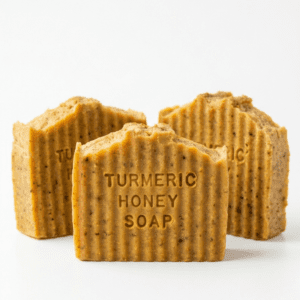
Back2Naturalness Turmeric Ginger Honey Soap — 3-Pack $24.99, FREE Shipping
7 Science-Backed Skin Benefits of Turmeric (Curcumin)
Fades Dark Spots & Hyperpigmentation
Curcumin inhibits tyrosinase — the enzyme that drives excess melanin production — directly targeting the biochemical pathway responsible for dark spots, acne scars, and uneven skin tone. Unlike some chemical brighteners that bleach indiscriminately, curcumin specifically reduces overproduction of melanin while leaving your natural skin tone intact. This makes it particularly valuable for people with medium to deep skin tones who are vulnerable to chemical over-lightening.
Reduces Skin Inflammation & Calms Redness
Inflammation is behind some of the most common skin problems — acne, eczema, rosacea, and post-inflammatory dark spots. Curcumin works at the cellular level to inhibit NF-κB, a key signaling molecule that drives inflammatory responses in skin tissue. Multiple NIH-indexed studies confirm curcumin’s ability to reduce inflammatory cytokines, making it beneficial for conditions ranging from acne to psoriasis to atopic dermatitis.
Fights Acne-Causing Bacteria
Curcumin demonstrates significant antimicrobial activity against Cutibacterium acnes (formerly P. acnes) — the bacteria primarily responsible for inflammatory acne breakouts. Combined with the antibacterial properties of raw honey, turmeric soap provides a gentle yet effective daily cleanser for acne-prone skin that fights breakouts without the dryness, irritation, or antibiotic resistance concerns associated with conventional acne treatments.
Supports Wound Healing & Scar Reduction
Curcumin accelerates wound healing through multiple mechanisms: it promotes collagen deposition, increases fibroblast density, and stimulates vascular growth in healing tissue. This is why turmeric is especially effective for fading acne scars — it not only reduces the pigmentation left behind but also supports the structural repair of skin underneath. Studies also show it triggers transforming growth factor-beta (TGF-β), a key compound in the skin remodeling phase of wound repair.
Slows Skin Aging & Reduces Wrinkles
UV radiation is the leading external cause of premature skin aging — and curcumin directly counters UV-induced damage. As a powerful antioxidant, it neutralizes the free radicals generated by sun exposure that break down collagen and cause fine lines. It also supports hyaluronic acid synthesis (key for skin hydration and plumpness) and has been shown to increase skin elasticity and firmness in clinical trials.
Soothes Eczema, Psoriasis & Sensitive Skin
For people with chronic inflammatory skin conditions, curcumin’s anti-inflammatory and immunomodulatory properties offer meaningful relief. Clinical studies show improvements in Psoriasis Area and Severity Index (PASI) scores with curcumin treatment. For eczema (atopic dermatitis), curcumin reduces the inflammatory cytokines that drive flare-ups while repairing the skin barrier — addressing both the symptoms and the underlying mechanism.
Repairs the Skin Barrier & Boosts Hydration
A healthy skin barrier is the foundation of all good skin — it locks in moisture, keeps irritants out, and maintains your skin’s natural pH balance. Curcumin has been shown to support barrier repair through hyaluronic acid synthesis and reduction of transepidermal water loss (TEWL). When combined with barrier-strengthening ingredients like Ghana shea butter and jojoba oil, turmeric becomes part of a complete skin health system — not just a spot treatment.
How Curcumin Actually Works in Your Skin
Curcumin’s power comes from its ability to act on multiple skin pathways simultaneously — something most single-ingredient treatments cannot do:
| Mechanism | Skin Benefit |
|---|---|
| Tyrosinase inhibition | Blocks melanin overproduction → fades dark spots |
| NF-κB inhibition | Reduces inflammation → calms acne, eczema, redness |
| Free radical scavenging | Neutralizes UV damage → slows aging |
| Collagen stimulation | Improves firmness and elasticity → reduces wrinkles |
| Antimicrobial action | Fights acne bacteria → fewer breakouts |
| TGF-β stimulation | Accelerates wound healing → fades scars faster |
| Hyaluronic acid support | Enhances skin hydration and barrier function |
Why the Other Ingredients Matter as Much as the Turmeric
Turmeric alone is not a complete skincare routine — the ingredients it is combined with determine how well it is delivered to the skin and how the skin responds. Here is why Back2Naturalness pairs turmeric with specific synergistic ingredients:
| Ingredient | Why It’s Paired With Turmeric |
|---|---|
| Ginger | Boosts circulation to deliver curcumin deeper into skin tissue; also anti-inflammatory |
| Raw Honey | Natural humectant that hydrates while gently exfoliating dead cells that block turmeric absorption |
| Ghana Shea Butter | Repairs and seals the skin barrier so treated skin retains moisture and heals faster |
| Jojoba Oil | Mimics natural sebum to balance oil production; helps carry fat-soluble curcumin into skin |
| JBCO | Jamaican Black Castor Oil supports scar reduction and adds deep nourishment |
| Sweet Almond Oil | Soothes reactive skin; reduces the likelihood of curcumin causing sensitivity in reactive skin types |
How Back2Naturalness Puts Turmeric’s Benefits Into a Daily Cleanser
Most people do not want a complex 10-step routine — they want something simple that works. Back2Naturalness Turmeric Ginger Honey Soap was formulated to deliver all 7 of turmeric’s skin benefits in a single daily cleanser that takes 60 seconds to use.
By combining real turmeric (not just a trace amount) with ginger, honey, Ghana shea butter, jojoba, JBCO, and sweet almond oil, this soap addresses dark spots, acne, inflammation, aging, and skin barrier health in every wash — without sulfates, parabens, or synthetic brighteners that can undermine the results.
Want the full breakdown on using turmeric soap specifically for dark spots and hyperpigmentation?
→ Read our full guide: Turmeric Soap for Dark Spots: Natural Hyperpigmentation Solution
All 7 benefits. One bar of soap. One daily habit.
3-Pack Turmeric Ginger Honey Soap — $24.99 FREE Shipping
FAQ: People Also Ask About Turmeric for Skin
Is turmeric good for your skin?
Yes — and there is substantial clinical evidence to support it. Turmeric’s active compound curcumin has been studied for its anti-inflammatory, antimicrobial, antioxidant, melanin-inhibiting, wound-healing, and barrier-repairing properties across dozens of peer-reviewed trials. A PubMed systematic review of 18 studies found statistically significant skin improvements in the majority of those trials. It is one of the most well-researched natural skincare ingredients available.
Does turmeric lighten skin permanently?
Turmeric does not bleach or permanently lighten skin — it specifically targets areas of excess melanin (dark spots) while leaving your natural skin tone intact. Once dark spots have faded with consistent use, they can return if the trigger (sun exposure, acne, hormones) is not managed. Maintaining daily SPF 30+ use and continuing with a turmeric cleanser helps prevent new spots from forming.
How long does turmeric take to work on skin?
Most people notice their skin feeling softer and looking more even within 1–2 weeks of consistent daily use. Visible fading of dark spots typically appears by weeks 2–4, with maximum results at 6–8 weeks. Skin renews itself on a roughly 28–40 day cycle, so any treatment needs at least one full skin cycle to show meaningful change.
Can I use turmeric on skin every day?
Yes — when used in a properly formulated product. Back2Naturalness Turmeric Ginger Honey Soap is specifically designed for daily use, with shea butter, almond oil, and jojoba oil balancing turmeric’s active properties to prevent any dryness or irritation. Using it twice daily (morning and evening) delivers the fastest results. If you have extremely reactive skin, start with once daily and increase as your skin adjusts.
Will turmeric stain my skin yellow?
No — not when it is properly formulated as a rinse-off cleanser. The yellow color you see in turmeric soap is the curcumin at work, but at the concentrations used in a rinse-off bar soap it does not leave a yellow tint on skin when rinsed thoroughly. Just lather, let it sit for 2–3 minutes on problem areas, and rinse completely with cool water.
Is turmeric soap better than vitamin C for dark spots?
They work differently and can complement each other. Vitamin C brightens by neutralizing oxidative damage and has good evidence for dark spots. Curcumin in turmeric goes further by also reducing the inflammation that causes post-inflammatory hyperpigmentation in the first place — which vitamin C does not address as directly. For acne-prone skin especially, turmeric’s antibacterial and anti-inflammatory properties make it the more complete solution. Many people use both: turmeric soap as their cleanser and a vitamin C serum as a follow-up treatment.
Science says turmeric works. Your skin is waiting to prove it.
Back2Naturalness Turmeric Ginger Honey Soap — 3-Pack $24.99 FREE Shipping.
Disclaimer: This content is educational and does not constitute medical advice. Individual results vary. Consult a dermatologist for persistent skin conditions.
